Featured


The Basic Principles Of Bankruptcy Basics and Requirements
Table of Contents
That maximizes money in the brief term, and you may have three to four years to save towards the negotiation quantity. Extremely unsafe to credit history, largely due to missed out on settlements and an unfavorable "cleared up" mark that could remain on your debt report for up to seven yearsMay be only choice if other choices (financial debt consolidation, equilibrium transfer charge card, debt forgiveness) aren't possibleTypically requires a cost to the 3rd party, which can offset some or every one of the savings from financial obligation settlementMay help you prevent bankruptcy if you have actually missed out on a number of paymentsNot all lenders collaborate with financial debt settlement firms Debt forgiveness might be ideal for you if you are experiencing a financial hardship that makes it almost difficult to pay down your debt balances.
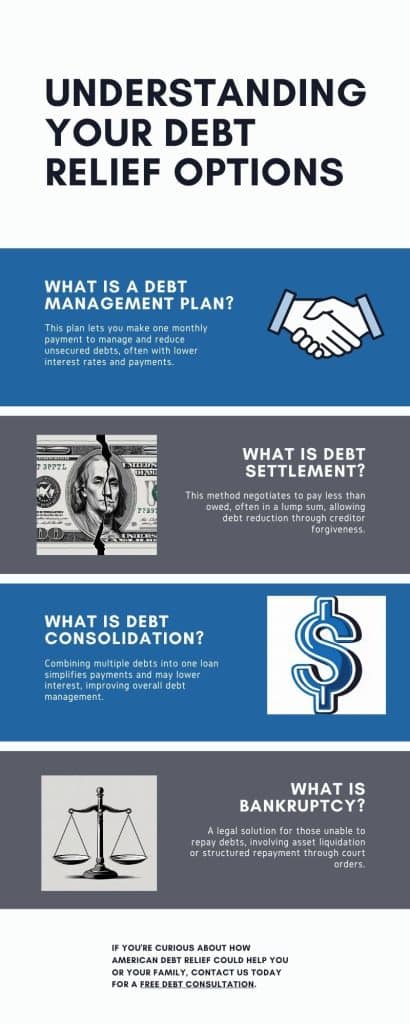
With a DMP, you make one monthly settlement to the debt counseling agency. Those funds are then distributed to financial institutions of your unsafe financial obligations, such as credit rating cards and installment financings. The agency deals with your lenders to lower passion rates or forgo costs, yet some financial institutions may decline such concessions.
A debt consolidation funding combines your eligible debts right into one brand-new loan. It can help you pay down financial obligation if you're able to protect a funding price that's reduced than the average rate of the accounts you're combining. You should avoid from racking up debt on those freshly cleared accounts or your financial debt might expand even higher.
That gives you lots of time to get rid of or considerably minimize your equilibrium while making interest-free repayments.
6 Simple Techniques For Community-Based Debt Forgiveness Programs Compared
You might require it if your creditor or a collection agency ever before attempts to gather on the financial obligation in the future. When a loan provider forgives $600 or more, they are needed to send you Kind 1099-C.
Financial debt mercy or negotiation usually injures your credit scores. Anytime you work out a debt for much less than you owe, it might look like "resolved" on your credit score record and affect your credit report for 7 years from the date of settlement. Your credit can also drop significantly in the months resulting in the mercy if you drop behind on repayments.
The Single Strategy To Use For Steps for Connect With a Counselor Right Away
Tax financial obligation compromise programs Tax obligation financial obligation occurs when the amount of taxes you owe surpasses what you have actually paid. This situation commonly arises from underreporting income, not submitting returns promptly, or inconsistencies found throughout an IRS audit. The effects of collecting tax financial obligation are serious and can include tax liens, which provide the internal revenue service a lawful insurance claim to your property as security for the debt.
Higher rate of interest on offered credit history. Incomes and Bank Accounts internal revenue service can levy (seize) incomes and savings account to please the financial obligation. Minimized revenue and disruption of crucial financial procedures. Residential or commercial property Seizure In extreme instances, the internal revenue service can take and offer property to cover the financial debt. Loss of useful properties and possible displacement.
Clinical depression, stress and anxiety, and various other mental health issues. Social Preconception Encountering lawful action from the IRS can carry social stigma. Damage to reputation and relationships. Employment Opportunities A bad credit rating rating as a result of exhaust financial debt can restrict employment chances. Trouble searching for or maintaining a work. Federal government Advantages Tax debt might affect qualification for federal government benefits, such as Social Safety and Medicaid.
The smart Trick of Credentials to Look For in the Industry That Nobody is Talking About
The OIC takes into consideration several variables, including the taxpayer's income, expenses, possession equity, and capacity to pay. Effectively bargaining an OIC can be complex, requiring a comprehensive understanding of the internal revenue service's standards and a strong argument for why your offer lines up with your ability to pay. It is necessary to keep in mind that not all applications are approved, and the procedure calls for detailed financial disclosure.
The internal revenue service assesses your overall monetary circumstance, including your revenue, expenses, asset equity, and ability to pay. You need to additionally be present with all declaring and settlement requirements and not remain in an open bankruptcy proceeding. The IRS additionally considers your conformity history, examining whether you have a record of timely declaring and paying taxes in previous years.
The Definitive Guide to What Regulations Says Under State Law
The application procedure for a Deal in Concession involves several thorough actions. You should finish and send Internal revenue service Type 656, the Offer in Concession application, and Kind 433-A (OIC), a collection info statement for individuals. These kinds need thorough economic details, including details concerning your revenue, financial obligations, expenses, and assets.
Back taxes, which are unpaid taxes from previous years, can substantially increase your overall internal revenue service financial debt if not addressed immediately. This financial debt can accumulate interest and late settlement penalties, making the original amount owed much larger gradually. Failing to repay tax obligations can cause the internal revenue service taking enforcement actions, such as providing a tax obligation lien or levy versus your building.
It is very important to attend to back taxes asap, either by paying the full quantity owed or by organizing a layaway plan with the internal revenue service. By taking positive steps, you can stay clear of the buildup of extra passion and penalties, and avoid a lot more hostile collection actions by the IRS.
One usual factor is the idea that the taxpayer can pay the total either as a swelling amount or through a layaway plan. The IRS also thinks about the taxpayer's revenue, expenses, possession equity, and future earning capacity. If these aspects indicate that the taxpayer can afford to pay greater than the offered amount, the IRS is most likely to turn down the deal.
Not known Details About Accreditation Standards in the Industry
It is essential to offer accurate and complete info in your application and to talk to a tax specialist to improve the opportunities of acceptance. Taking care of IRS financial obligation can be intricate and complicated. Tax obligation professionals, such as CPAs, tax lawyers, or signed up representatives, can offer vital support. They have the experience to browse the intricacies of tax law and IRS procedures.

Table of Contents
Latest Posts

The Ultimate Guide To The Benefits to Consider of Bankruptcy
The Greatest Guide To How Delaying to Get Debt Help Will Cost You

Unknown Facts About Worth vs Going It Alone Methods
More
Latest Posts
The Ultimate Guide To The Benefits to Consider of Bankruptcy
The Greatest Guide To How Delaying to Get Debt Help Will Cost You
Unknown Facts About Worth vs Going It Alone Methods